Watership Down

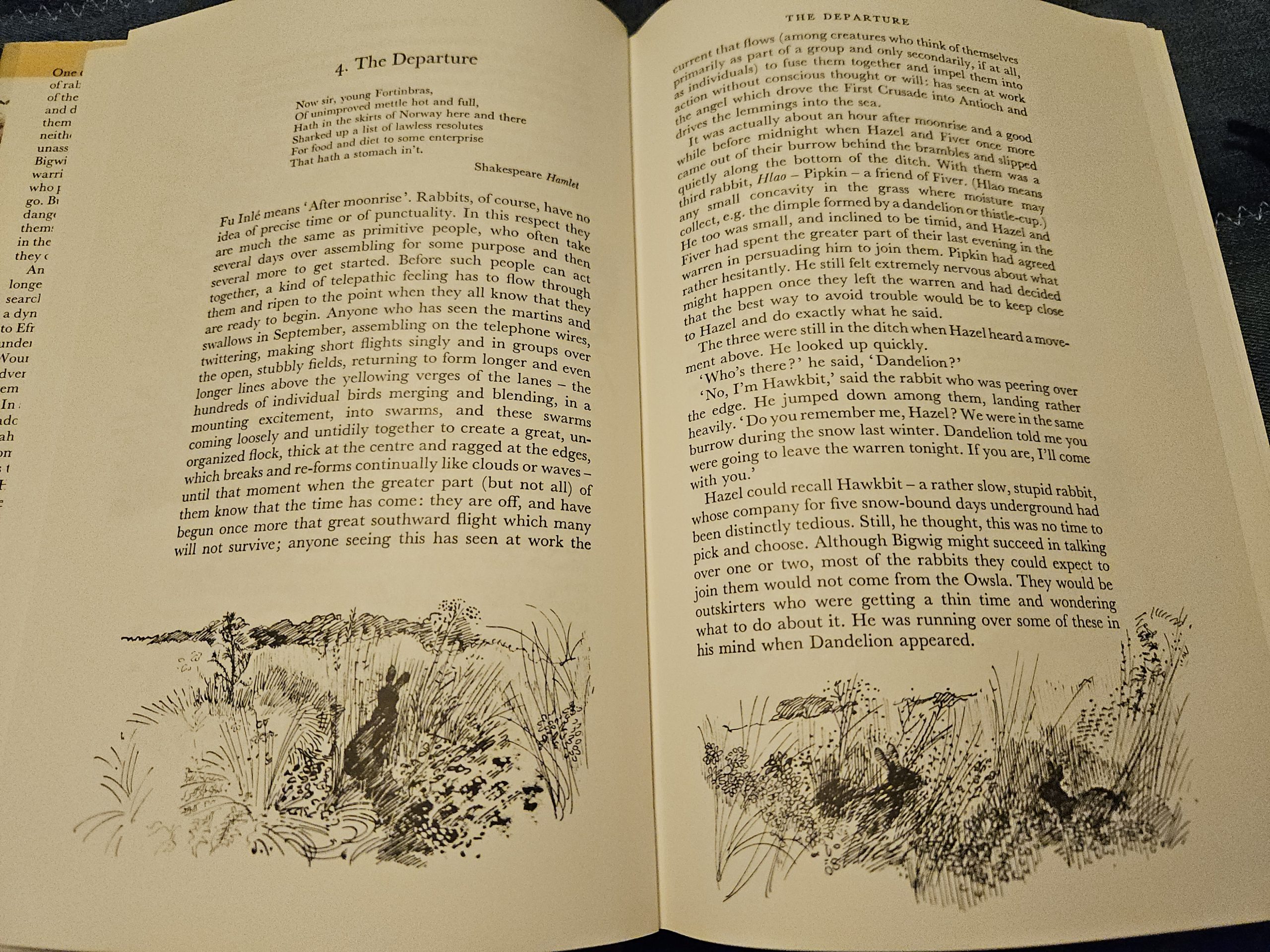
I still can’t believe I read this book aloud. It is huge. There are names that are very challenging to pronounce. There is a seagull character who is supposed to have a Russian accent (who I’m afraid ended up sounding like he came from the south-eastern part of the United States) And did I mention that it is huge? But the boys were getting older and they really enjoyed it, so it was all worth it.

(No, I did not show them the movie. I saw snippets of it as a child, about the same time as I saw snippets of The Last Unicorn and it terrified me–and apparently everyone else, this really is not a movie for children.)

I expect this will be the final entry for this blog. My boys are now well past the optimal age of reading aloud, which means there are no new books waiting to be added. So, although I read this to the boys using a mass market paperback, as a special treat, and commemoration of the end of this project, I purchased an illustrated version of this book from England, pictured below. It has been a true pleasure working on this blog; this time with my boys was incredibly precious and this project has brought back and preserved so many memories. All the best.

Author: Richard Adams

Illustrator: John Lawrence
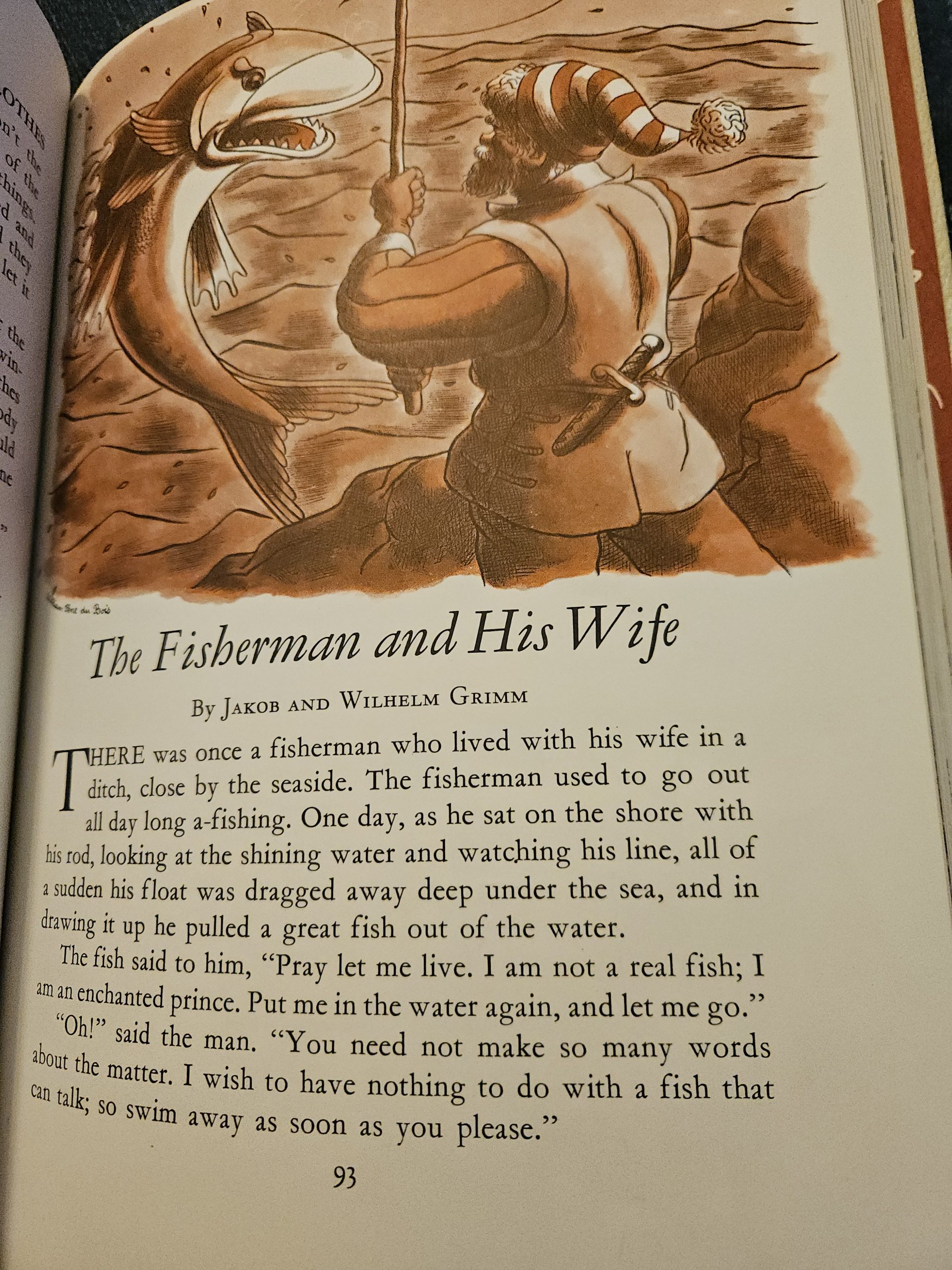
Classic Fairy Stories of the World

This book, from Cliveden Press (the 1979 edition), was the other primary fairy tale book of my childhood. As with the Childcraft book discussed below, when I think of fairy tales, a lot of the default versions in my head come from this book. And, also as with the Childcraft book, the boys didn’t spend nearly as much time with this book as I had as a child.

Authors: Many and uncredited

Illustrator: Uncredited

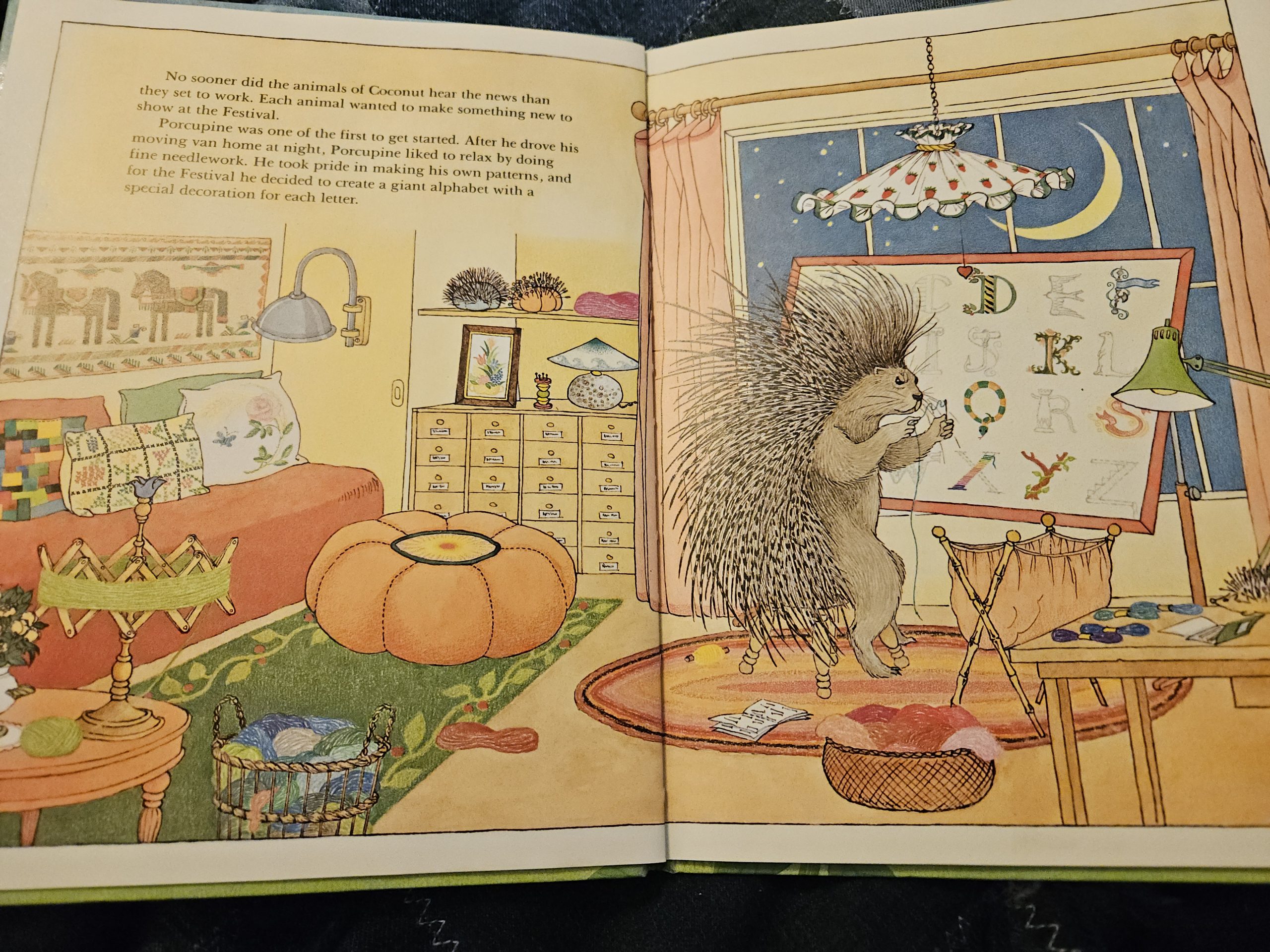
And May the Best Animal Win!

This book, Need a House? Call Ms. Mouse!, and The Elephant’s Airplane and Other Machines are peas in a pod. In all of them, various animals want something (a prize-winning project for a festival, a house, a means of transportation). In all of them, there really isn’t a story beyond that. The pleasure in these books (and there is a lot of it!) is all in the highly-detailed illustrations by Doris Susan Smith, whose artwork is very special. Of the three books, this was the least popular in our house and is the least essential. But it is still well worth having, again for the art alone.

Author: Anne-Marie Dalmais

Illustrator: Doris Susan Smith

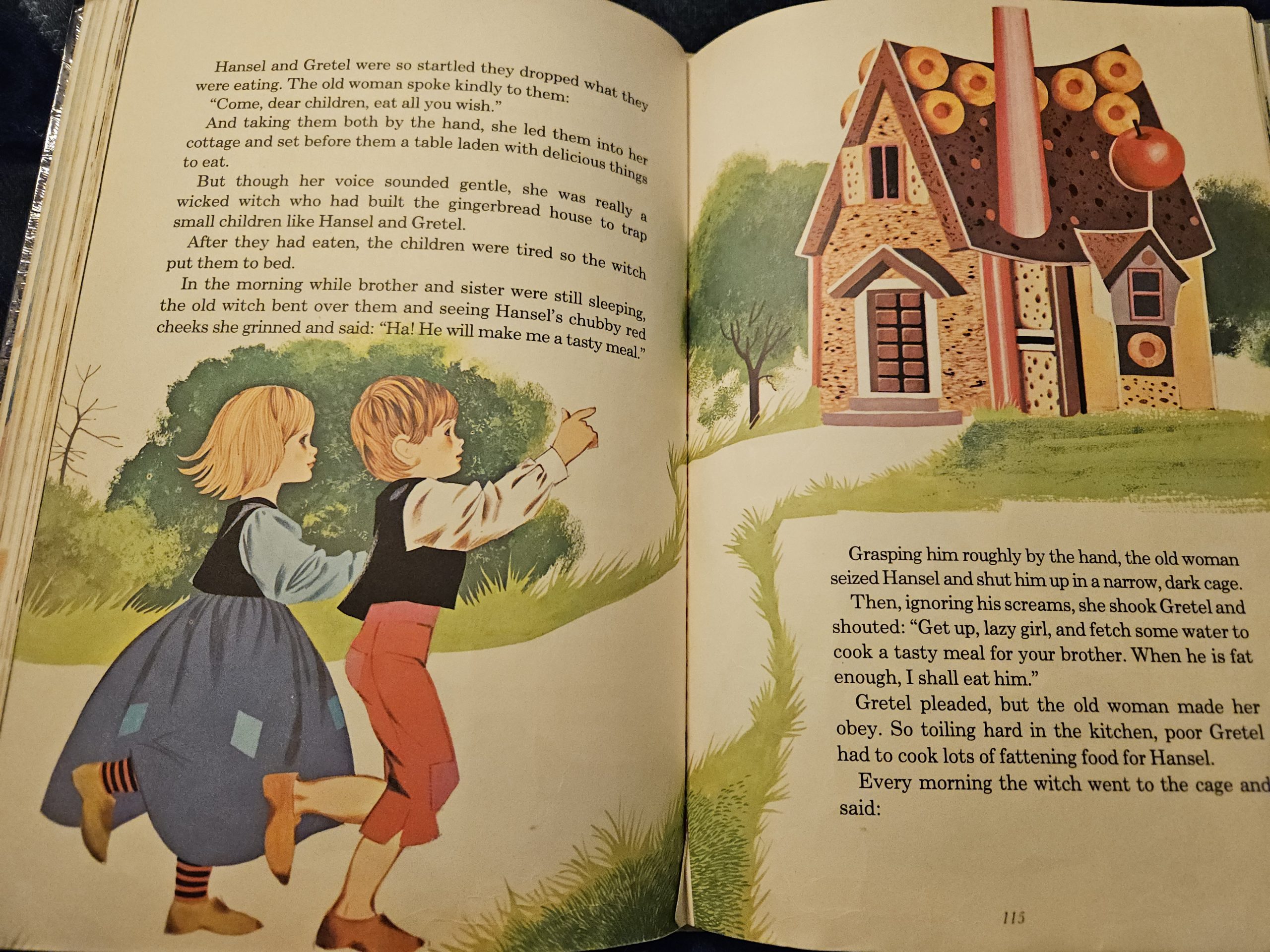
Childcraft Folk and Fairy Tales

My family of origin had the whole 15-volume Childcraft set (the 1961 edition) when I was a child, but I ignored most of them (with the exception of this volume, Storytelling and Other Poems, Animal Friends and Adventures, Life in Many Lands, and Great Men and Famous Deeds). Most of them were non-fiction, and already VERY dated. This volume, however, was a favorite. It contains a variety of (mostly European) folk and fairy tales by lots of different authors and illustrators. When I think of fairy tales, a lot of the default versions in my head come from this book.

While I read some of the stories in it to the boys (fairy tales are important for cultural literacy!), they didn’t spend nearly as much time with this book as I had as a child. (After looking at the rest of the 1961 set as an adult, I ended up donating all the other volumes).

Authors: Many

Illustrators: Many and uncredited (although some pictures are signed)

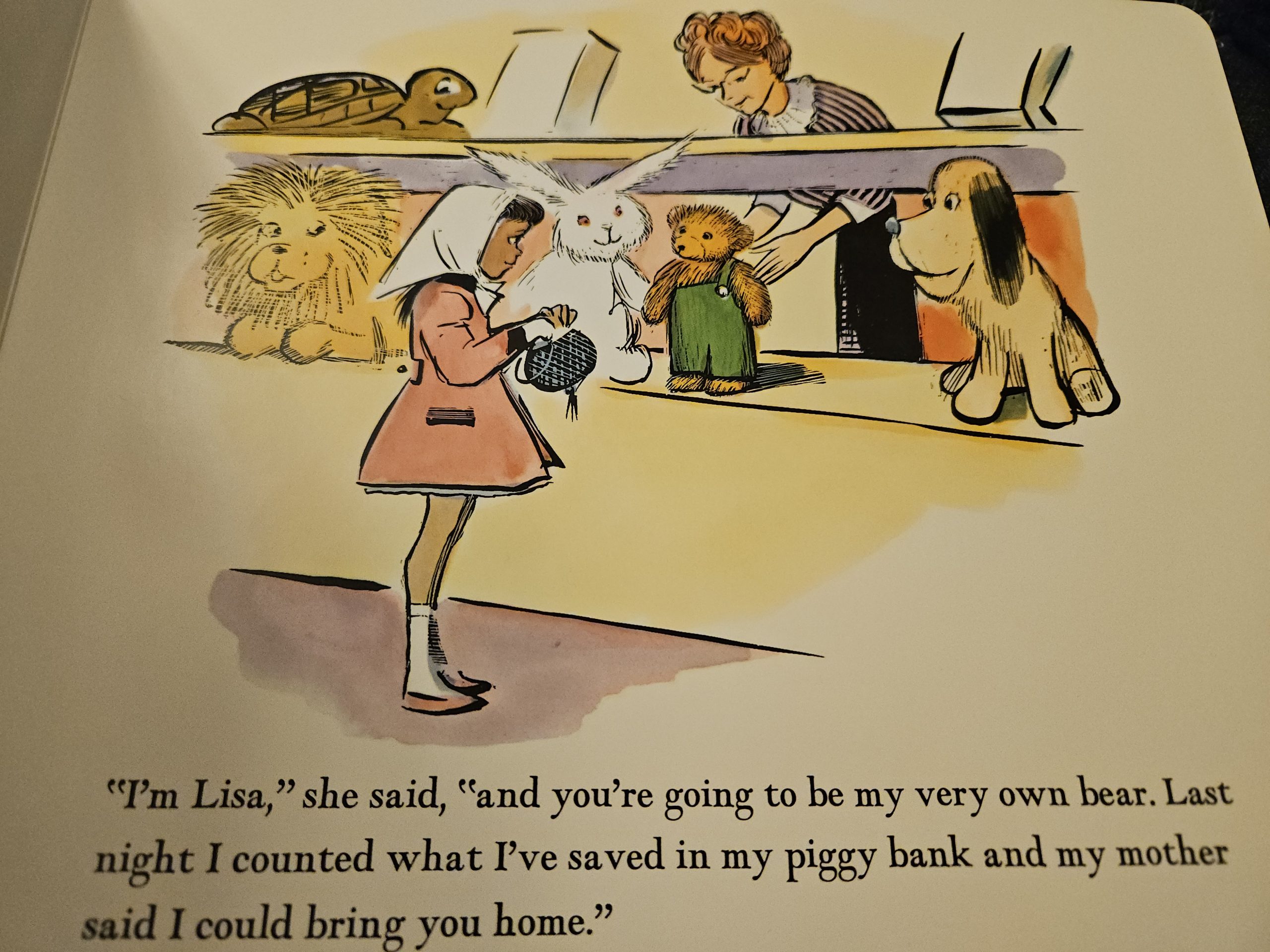
Corduroy

This is another classic. Corduroy, a stuffed bear with a missing button, tries without success to find his button in a very large department store. Ultimately, he finds a home and a friend (and learns that being perfect isn’t required for either of those things to happen).

A sweet book with lovely soft pictures. And just look at the fashion choices!

Author: Don Freeman

Illustrator: Don Freeman

Boot & Shoe

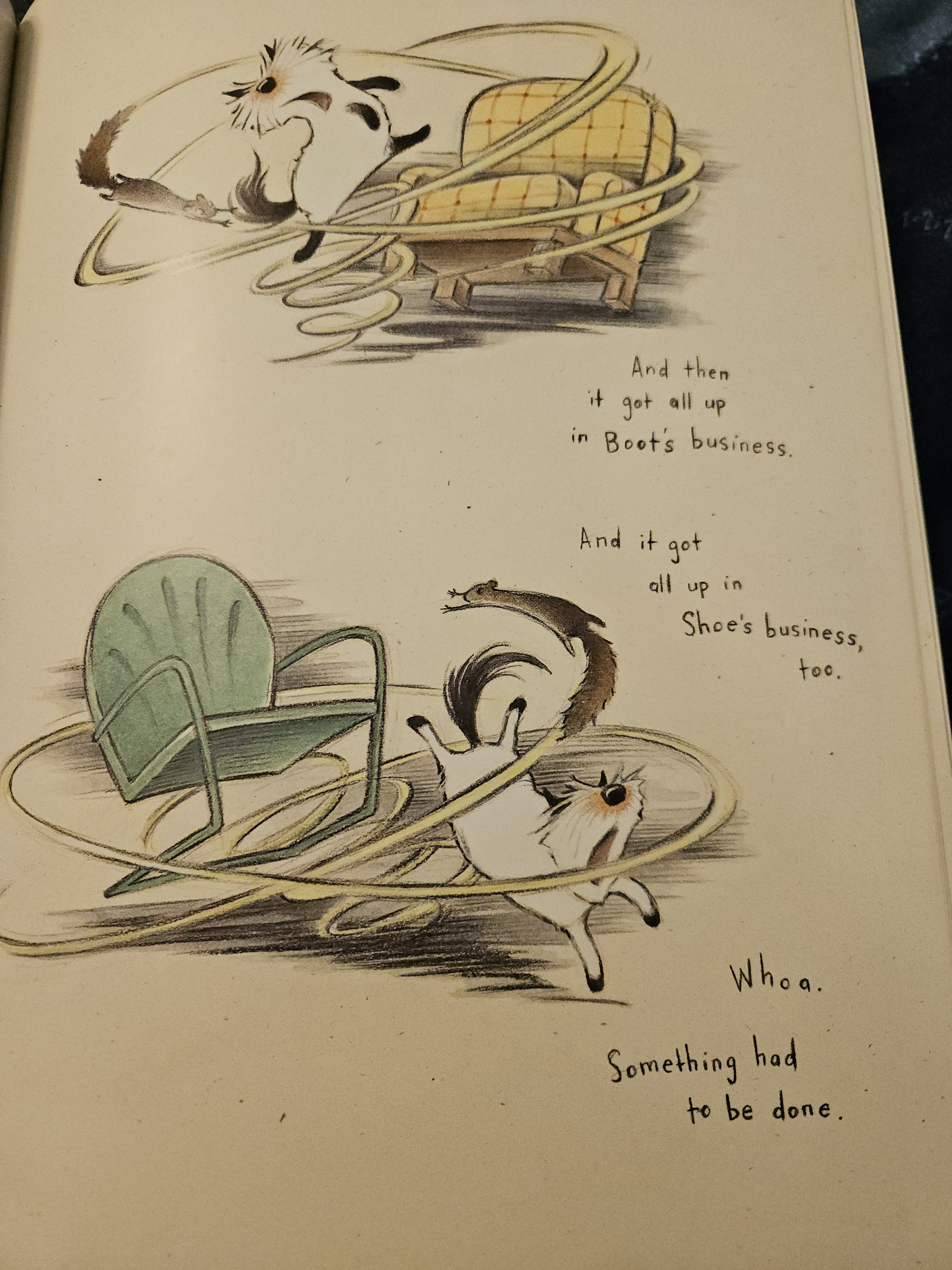
Two dog brothers and best friends do lots of things together (eating, sleeping, peeing), but one is a front porch kind of dog and the other is a back porch kind of dog. When a squirrel “gets all up in [their] business,” things get confused and the dogs miss each other terribly until the very funny happy ending.

This one was especially popular with my youngest. And I always enjoy the work of Marla Frazee, who has a sub-specialty in showing things in motion (as she did in Roller Coaster and Santa Claus the World’s Number One Toy Expert) and outdoes herself here. (Speaking of motion, is it possible that one of Those Darn Squirrels! is making a guest appearance here?)

Author: Marla Frazee

Illustrator: Marla Frazee

Slip the Otter Finds a Home

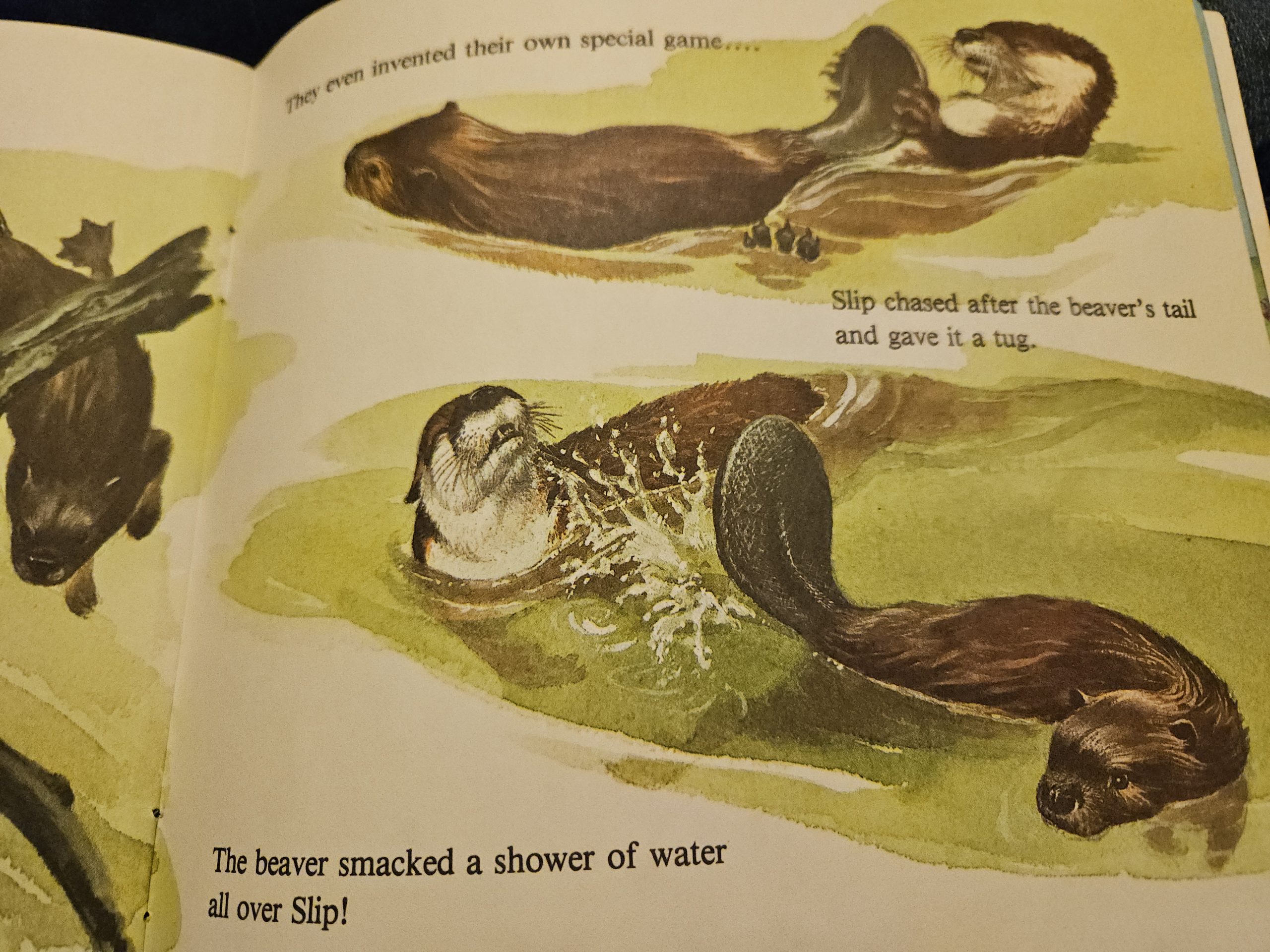
This is a book about helping children adjust to moving, like The Berenstain Bears’ Moving Day, but a bit more subtle. Slip’s otter family can’t find enough food, so they have to move to a new home, and Slip is sad. But when Slip finds a friend (and her family builds a new mud slide), she starts to feel better.

When I was small, I loved to look at the pictures in this book. And otters were very popular here when the boys were small. We liked visiting them at the zoo and we liked reading about them, in A Lot of Otters, Do Unto Otters, and this book too.

Author: Olena Kassian

Illustrator: Olena Kassian

The Hobbit

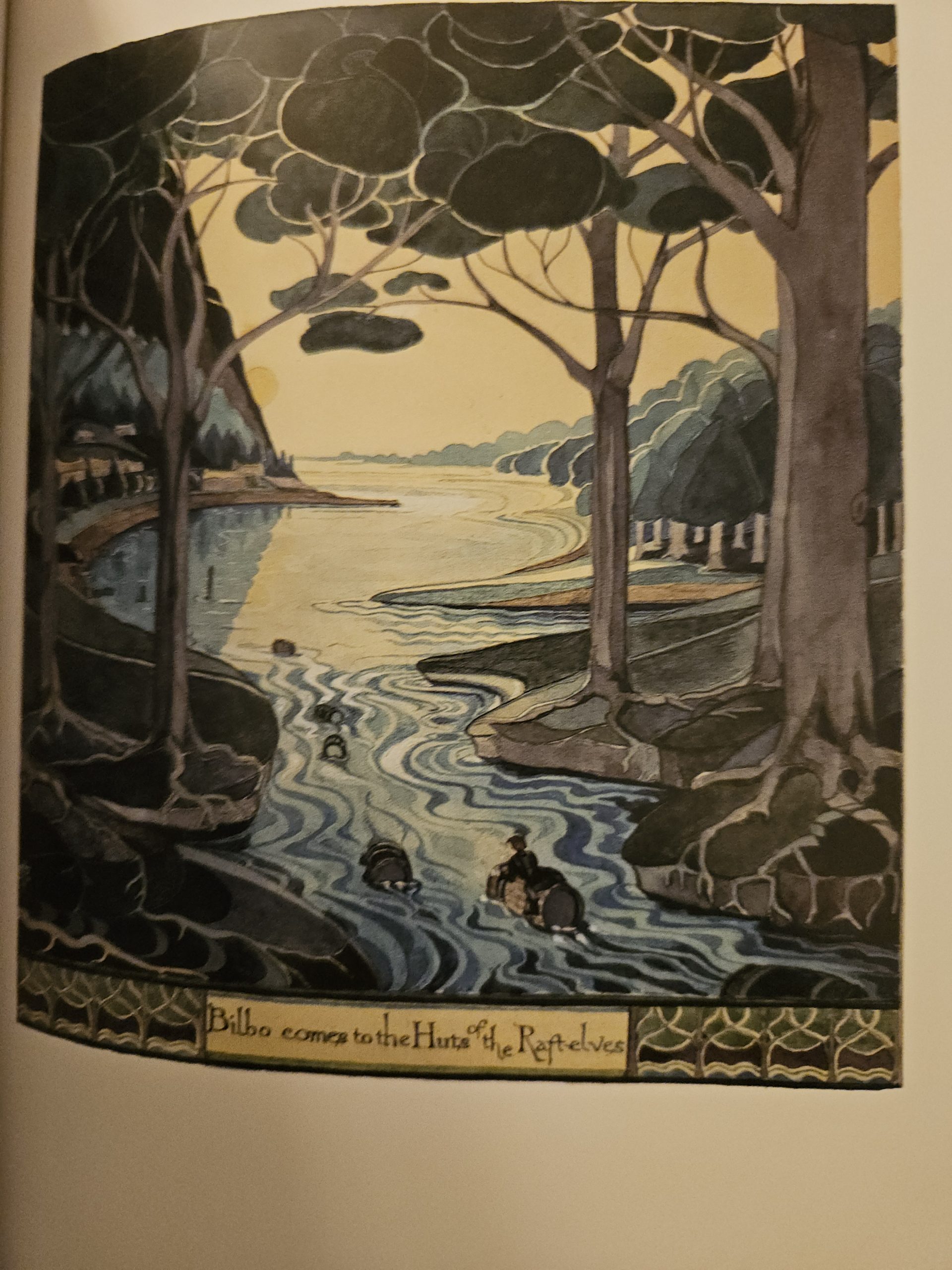
This is another one that was so much fun to read aloud! If you’re reading this blog in English, you almost certainly already know the basics of this adventure. But the vibe may be unexpected. J.R.R. Tolkien told this first to his children and it really shows; there is a lightness and sense of play that largely goes by the wayside in the Lord of the Rings series that ended up following it.

Main character Bilbo Baggins is a hobbit and homebody, not a traditional heroic type. But he becomes a hero nonetheless by stepping outside his literal comfort zone and trying new things, while always maintaining his interest in creature comforts (as so lovingly described by Tolkien). It is not to be missed (and neither are the Lord of the Rings movies, which are masterpieces). Unfortunately, however, the three (!) movies made from The Hobbit should absolutely be skipped.

Author: J.R.R. Tolkien

Illustrator: J.R.R. Tolkien

Summer in Orcus

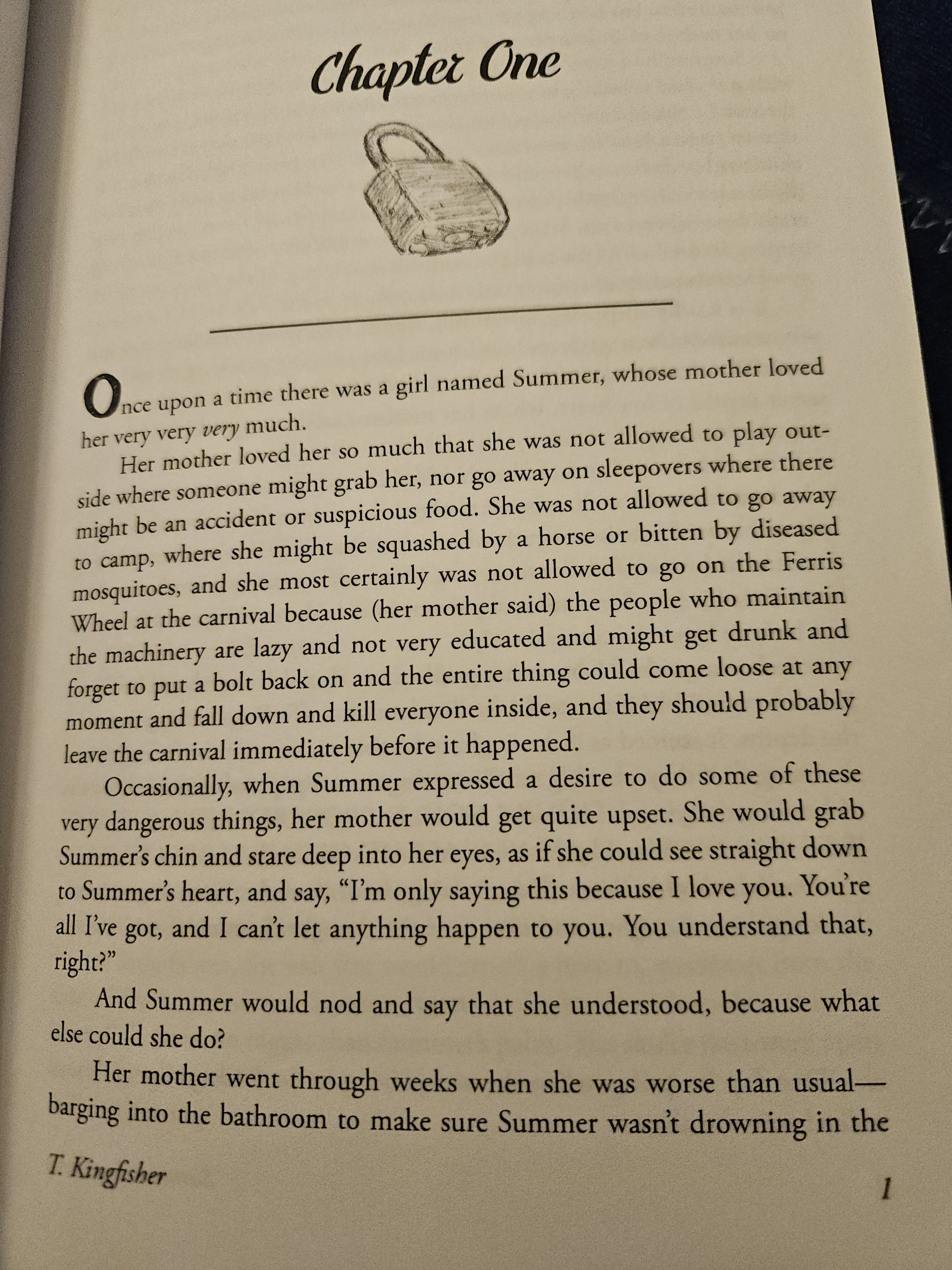
Oh, I love this book so much. I was hooked from the first page (see below) and it just got better and better until the sheer perfection of the ending. I don’t want to spoil anything for anyone who hasn’t read it yet, so suffice it to say than it is a very unusual, beautiful, funny, and touching portal fantasy. Orcus and The Last Unicorn are the two books on this entire blog that I would implore you to read as soon as possible, regardless of whether you have a child to read them to. And if you do have a child to read them to, you’re all in for a great treat.

A tiny tangential note: I wonder what it would have looked like if Ursula Vernon (aka T. Kingfisher) had done her own illustrations for this book. I love her art work and Lauren Henderson’s illustrations of the main character come across as very young and delicate to me in a way that doesn’t quite jibe with my vision of her. But reasonable minds can differ and it isn’t a flaw in the glorious book.

Author: T. Kingfisher

Illustrator: Lauren Henderson

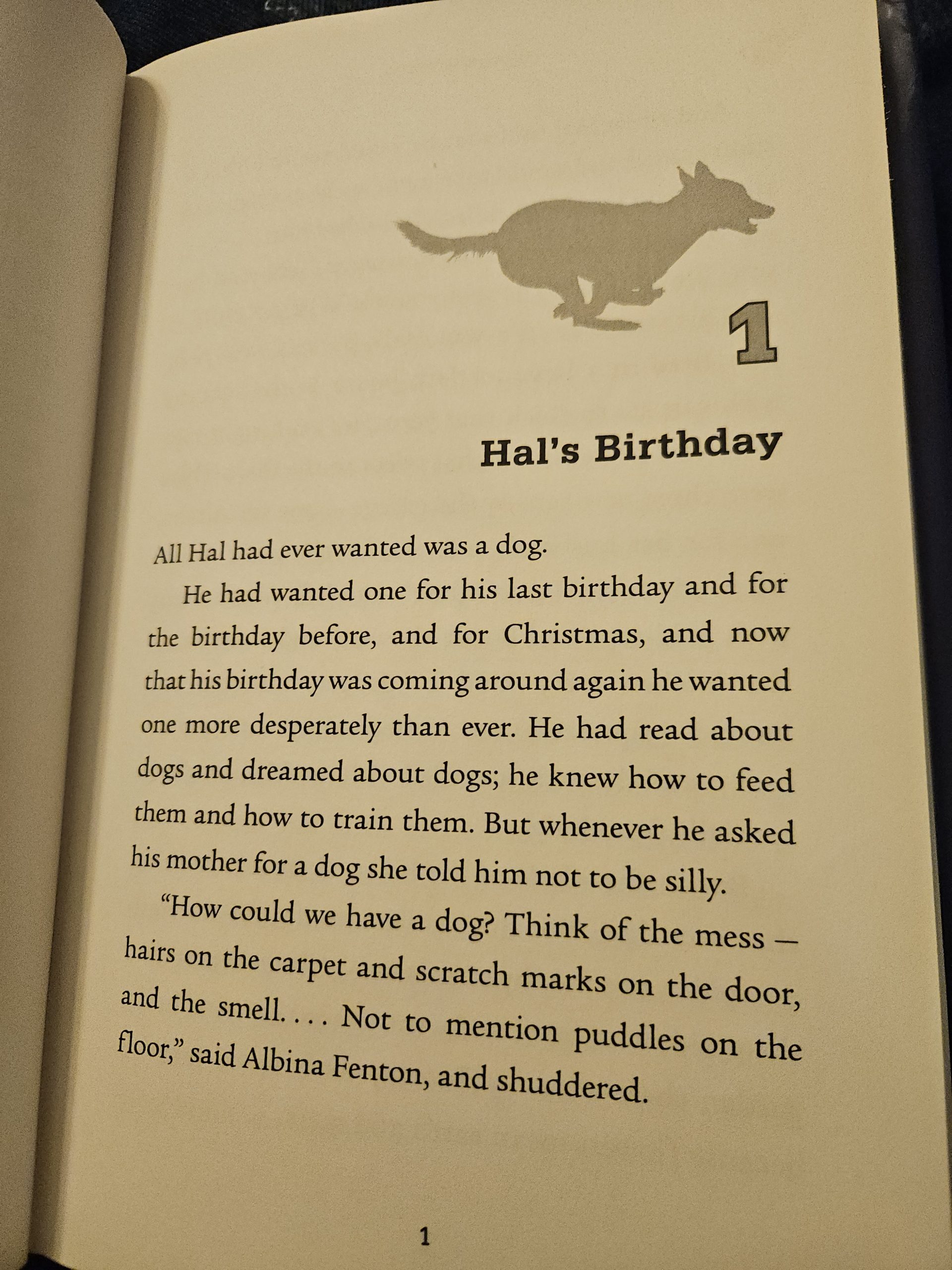
One Dog and His Boy

The dog, Speck, and boy, Hal, in this book need each other terribly and will do whatever it takes to stay together. Much of the book consists of their cross-country odyssey to Hal’s grandparents who love him (as opposed to his parents who generally treat him like a box to be checked rather than a person). Hal and Speck are initially brought together when Hal’s parents rent Speck for three days, assuming Hal will quickly lose interest in (and finally shut up about) having a dog. Other dogs in the dog rental agency end up joining Speck and Hal’s journey and their search for their proper places in the world is also an important part of the book.

This book is an interesting companion to Matilda. While Matilda’s parents are irredeemably terrible, she is a Dahl protagonist and gets on with things (to an entirely unrealistic degree, but realism isn’t Dahl’s thing). The parents in this book are also awful–materialistic and shallow, giving Hal everything except what he actually needs–but here it nearly breaks him. This book is terribly sad (dog rentals?!), funny (full of love and understanding of dogs and children), and angry (adults should not treat children or animals they way that they so often do).

While the author knows and grieves that she isn’t able to change reality, she does make sure that just about everyone in the book gets a very happy ending. This was Eva Ibbotson’s last book; it seems the book may not have made it fully through the editing process at the time of her death and I suspect if it had a few things would have been a bit more polished. And I wouldn’t have minded cutting down on some time spent with some rather villainous people that end up chasing the main characters (it’s a bit complicated). But it doesn’t really matter in the end–it’s almost impossible to put down and kept the boys riveted.

Author: Eva Ibbotson

Illustrator: N/A